La formation multimodale combine plusieurs modalités d’apprentissage (présentiel, distanciel, situation de travail) au sein d’un même parcours pour s’adapter aux contraintes de chaque apprenant. Souvent confondue avec le blended learning ou la comodalité, elle répond pourtant à une logique différente. Cet article vous donne une définition claire, la distinction avec les notions voisines, une méthode en 8 étapes pour construire votre parcours et des exemples concrets.
Qu’est-ce que la formation multimodale ?
La formation multimodale regroupe plusieurs modalités pédagogiques au sein d’un même parcours : la formation présentielle, la formation à distance (FOAD) et la formation en situation de travail (FEST). L’objectif : tirer parti des forces de chaque modalité pour proposer un apprentissage plus riche, plus souple et mieux adapté à chaque apprenant.
Les trois composantes d’un parcours multimodal
- Formation présentielle : échanges directs avec le formateur, travaux de groupe et apprentissage collaboratif en salle.
- Formation à distance (FOAD) : autonomie et flexibilité, l’apprenant avance à son rythme selon ses contraintes et son emploi du temps.
- Formation en situation de travail (FEST) : apprentissage ancré dans le contexte professionnel, avec une application immédiate des compétences acquises.
Les avantages de la formation multimodale
Flexibilité et accessibilité
Les formations multimodales offrent aux apprenants la possibilité de s’adapter à leurs contraintes organisationnelles, propres à chacun. Ces formations sont ainsi accessibles à un plus large public. Elles offrent un équilibre entre présentiel et distanciel.
Personnalisation de l’apprentissage
En multimodalité, l’apprentissage peut être davantage personnalisé pour s’adapter aux besoins individuels des apprenants. Par exemple, la multimodalité permet de proposer des modules théoriques à distance et des ateliers et activités pratiques en présentiel. Cette approche se rapproche d’ailleurs de la méthode de classe inversée, qui a déjà fait ses preuves dans de grandes universités à travers le monde.
Multimodal, blended learning, hybride, comodal : quelles différences ?
Ces quatre termes sont souvent employés comme des synonymes. Ils décrivent pourtant des réalités distinctes. La différence tient à un critère simple : les modalités se déroulent-elles l’une après l’autre, ou en même temps ?
| Notion | Principe | Simultanéité présentiel/distanciel |
|---|---|---|
| Multimodal training | Plusieurs modalités articulées sur un même parcours (présentiel, FOAD, FEST) | Non, les modalités se succèdent |
| Blended learning | Alternance entre présentiel et e-learning à distance | Non, en alternance |
| Enseignement hybride | Mélange de présentiel et de distanciel, à des moments distincts | Rarement |
| Comodalité (HyFlex) | Le même cours suivi en présentiel ET à distance en même temps, en temps réel | Oui, c’est le cœur du dispositif |
En résumé : la multimodalité articule des modalités dans le temps, tandis que la comodalité les fait coexister en direct. La comodalité représente la forme la plus aboutie de l’apprentissage flexible. Pour aller plus loin, consultez notre article dédié au blended learning.
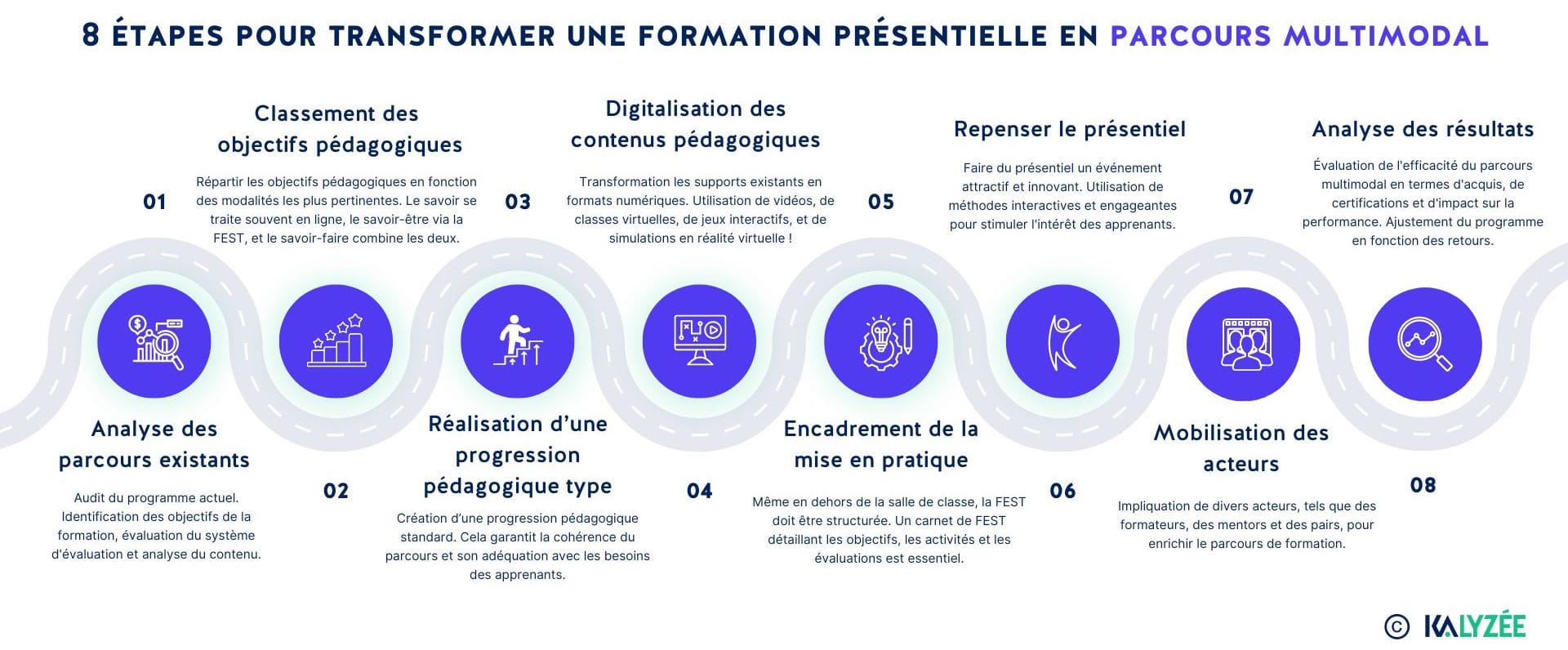
8 étapes pour transformer une formation présentielle en parcours multimodal
1. Analyser les parcours existants
Commencez par auditer le programme actuel. Identifiez les objectifs de la formation, évaluez le système d’évaluation et analysez le contenu.
2. Classer les objectifs pédagogiques
Répartissez les objectifs pédagogiques en fonction des modalités les plus pertinentes. Le savoir se traite souvent en ligne, le savoir-être via la FEST, et le savoir-faire combine les deux.
3. Réaliser une progression pédagogique type
Créez une progression pédagogique standard. Cela garantit la cohérence du parcours et son adéquation avec les besoins des apprenants.
4. Digitaliser les contenus pédagogiques
Transformez les supports existants en formats numériques. Utilisez des vidéos, des classes virtuelles, des jeux interactifs, et des simulations en réalité virtuelle pour enrichir l’expérience d’apprentissage.
5. Encadrer les mises en pratiques pratiques (FEST)
Même en dehors de la salle de classe, la FEST doit être structurée. Un carnet de FEST détaillant les objectifs, les activités et les évaluations est essentiel.
6. Repenser le présentiel
Faites du présentiel un événement attractif et innovant. Utilisez des méthodes interactives et engageantes pour stimuler l’intérêt des apprenants.
7. Mobiliser les acteurs de la formation
Impliquez divers acteurs, tels que des formateurs, des mentors et des pairs, pour enrichir le parcours de formation.
8. Analyser les résultats
Évaluez l’efficacité du parcours multimodal en termes d’acquis, de certifications et d’impact sur la performance. Ajustez le programme en fonction des retours.
Exemples concrets de parcours multimodaux
Exemple 1 : Formation en marketing digital
Théorie en ligne : Modules e-learning sur les bases du marketing digital.
Ateliers en présentiel : Séances de travail sur des études de cas réels.
FEST : Application des concepts dans des projets de marketing au sein de l’entreprise.
Exemple 2 : Formation en gestion de projet
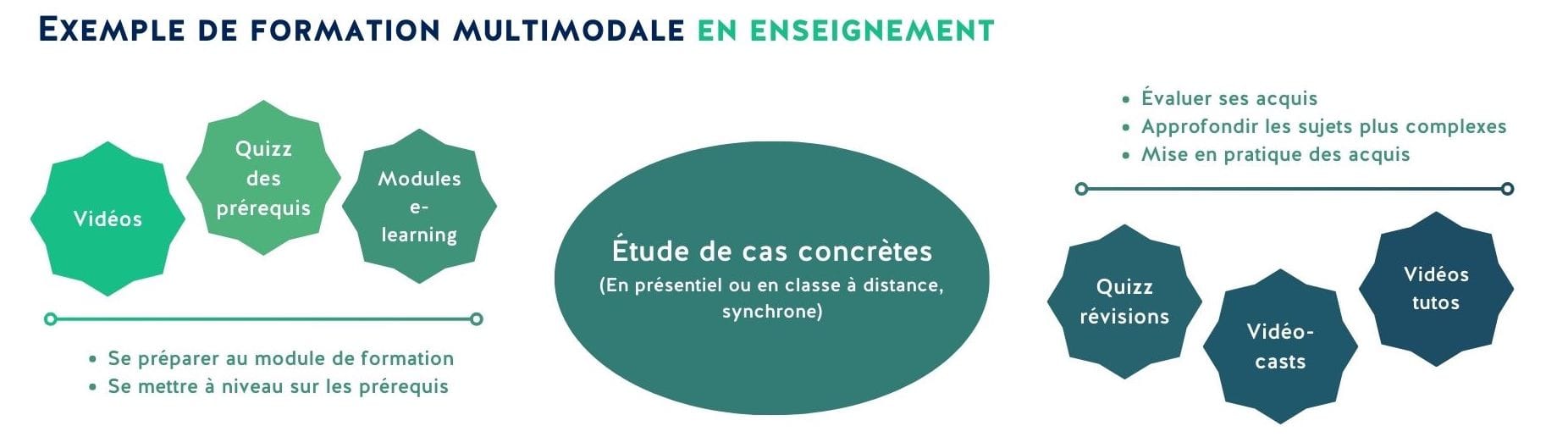
Cours en ligne : Vidéos et quiz sur les méthodes de gestion de projet.
Séminaires en présentiel : Workshop en groupe.
FEST : Évaluation, mise en pratique concrète
La formation multimodale offre une solution flexible et personnalisée pour répondre aux besoins diversifiés des apprenants et des organisations. En combinant les avantages de la formation présentielle, à distance, et en situation de travail, cette approche permet d’équilibrer l’interactivité directe avec les formateurs, l’autonomie de l’apprentissage en ligne et l’application pratique des compétences dans un contexte professionnel.
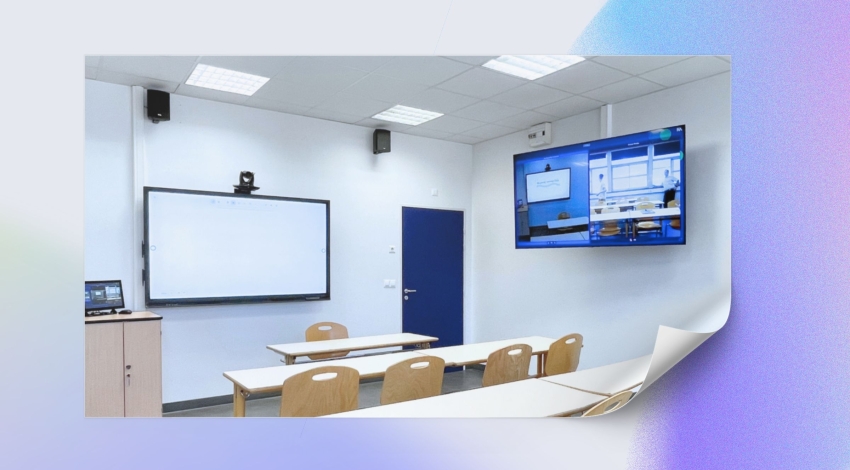
Pour aller encore plus loin dans la flexibilité et l’efficacité des cursus multimodaux, découvrez les possibilités de créer des salles de classe hybrides avec Kalyzée. Ces solutions innovantes permettent de réaliser des sessions de cours en présentiel de manière synchrone tout en les rendant accessibles à distance. En plus d’équipements audiovisuels de grande qualité, les salles de classe hybrides de Kalyzée bénéficient d’un orchestrateur de salle, qui automatise les diffusions, pour assurer une expérience fluide et interactive, tant pour les participants en présentiel que pour ceux à distance. Pour plus d’informations, contactez-nous et découvrez comment transformer votre approche de la formation.
Comment déployer la partie synchrone d’un parcours multimodal
La brique la plus difficile à industrialiser dans un parcours multimodal, c’est le cours synchrone : la séance suivie en même temps par des apprenants en salle et d’autres à distance. C’est là que la qualité de captation et de diffusion fait la différence entre un vrai cours à distance et une simple webcam posée au fond de la salle.
Kalyzée Connect automatise cette étape. Installée sur l’ordinateur de la salle et reliée à l’agenda de l’établissement, la solution filme le formateur, le tableau et la salle, et diffuse le cours en direct et en replay multi-flux. L’apprenant à distance choisit l’angle qu’il agrandit, comme s’il était au premier rang. Le formateur, lui, clique sur son cours et c’est en ligne : aucun branchement, aucune manipulation technique.
Émargement automatique, quiz, sondages, tableau blanc collaboratif et intégration LMS/ENT complètent le dispositif pour rendre la séance synchrone aussi vivante à distance qu’en présentiel.
Réserver une démo en conditions réelles
Formation multimodale : questions fréquentes
Quelle est la différence entre formation multimodale et blended learning ?
Le blended learning combine uniquement présentiel et e-learning à distance. La formation multimodale est plus large : elle articule aussi la formation en situation de travail (FEST) et peut mobiliser davantage de modalités sur un même parcours.
Formation multimodale et comodalité, est-ce la même chose ?
Non. Dans un parcours multimodal, les modalités se succèdent dans le temps. Dans un dispositif comodal, le présentiel et le distanciel ont lieu simultanément : les apprenants à distance suivent le cours en direct, en même temps que ceux présents en salle.
Faut-il un logiciel pour gérer une formation multimodale ?
Un LMS suffit à orchestrer les modules asynchrones (contenus e-learning, quiz, suivi). Pour la partie synchrone (cours suivi à la fois en salle et à distance), il faut une solution de captation et de diffusion comme Kalyzée Connect, qui filme et diffuse automatiquement la séance.
Quels sont les avantages de la formation multimodale ?
Elle offre plus de flexibilité pour l’apprenant, une meilleure accessibilité, une personnalisation du parcours et une application concrète des compétences grâce à la FEST. Elle permet aussi de toucher un public plus large sans sacrifier la qualité pédagogique.