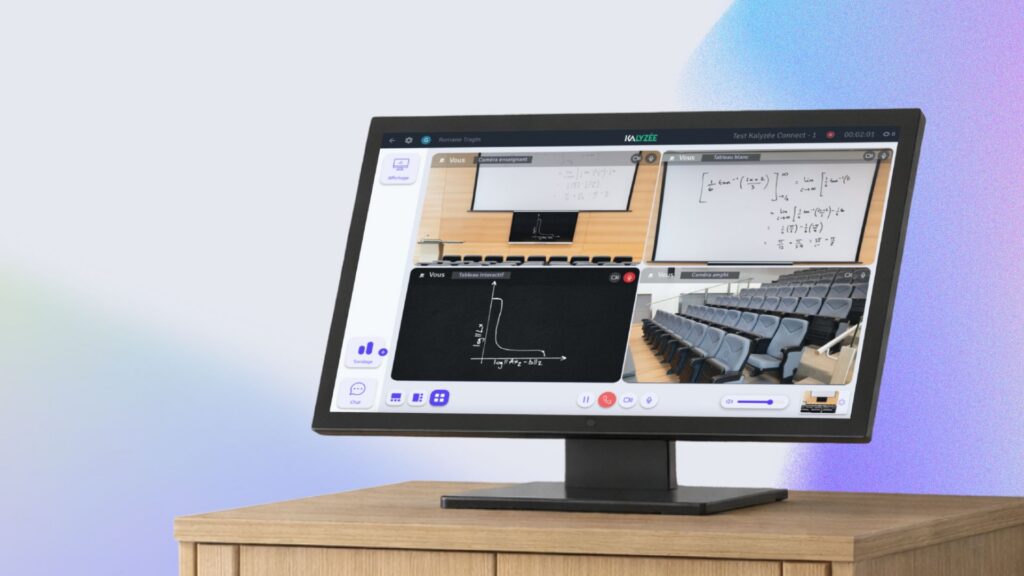

Hybridization in higher education offers a promising way to revitalize the teaching and learning experience. However, for this transition to succeed, it requires rigorous, well-structured support.
In this article, we explore a four-step process to guide higher education institutions through this transformation, with a focus on co-construction, strategic vision, and the feasibility of hybridization initiatives. This approach is inspired by the research project Hybridation: principes et repères, by Didier Paquelin and Laurence Lachapelle-Bégin.
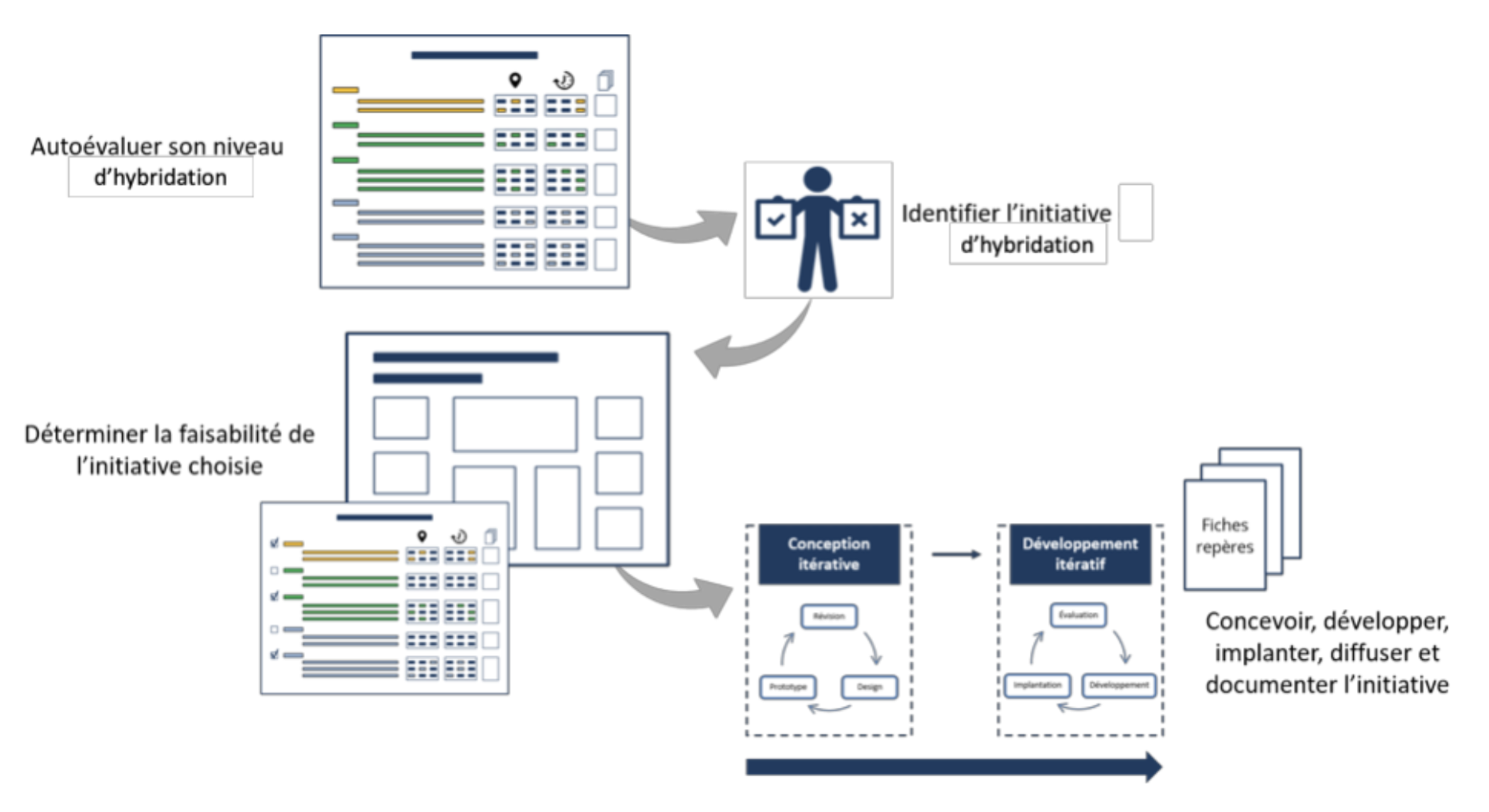
Step 1: Self-assessing the level of hybridization
Self-assessing the level of hybridization is the essential starting point for any higher education institution aiming for educational transformation. This initial phase involves in-depth reflection on the institution’s current situation and future aspirations, whether at the level of the institution, a teaching unit, or a program.
The importance of an overall reflection on the level of hybridization:
Before undertaking major changes, it’s essential to understand where the institution currently sits on the hybridization spectrum. This goes beyond simply adopting technology; it’s a comprehensive look inward at existing teaching methods, administrative structures, and educational culture. This initial step helps identify the institution’s strengths and weaknesses in the context of hybridization.
Involving key stakeholders: leadership, teachers, teaching support services, etc.:
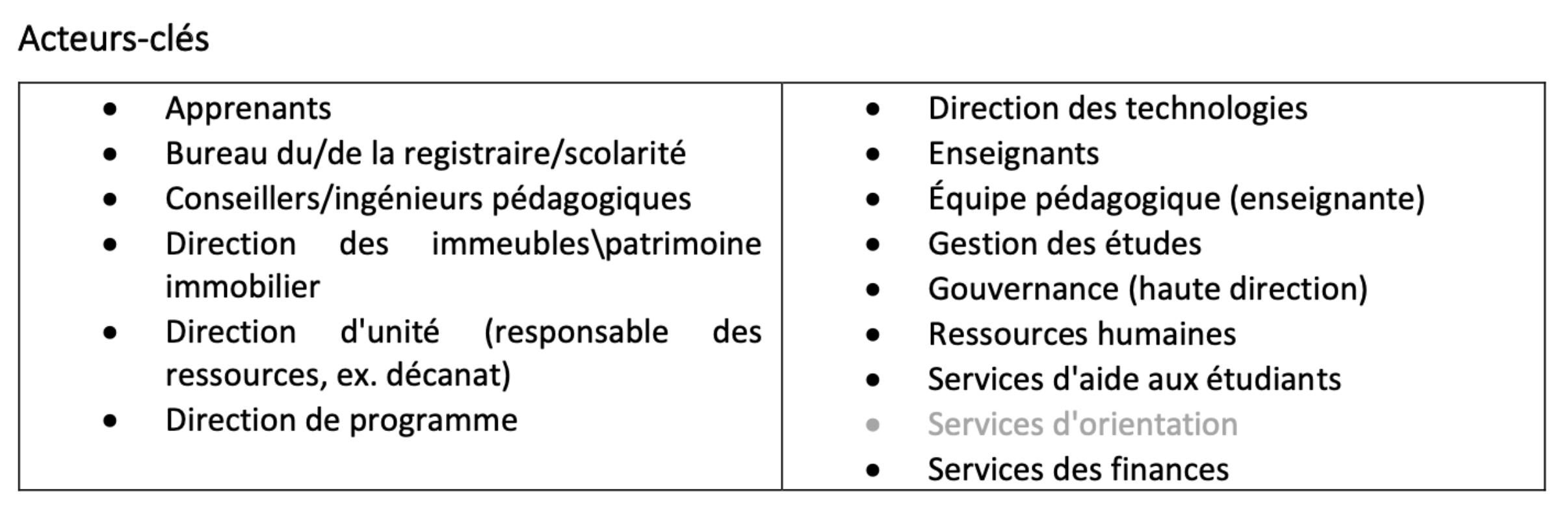
An inclusive approach is essential at this stage. Active participation from leadership, teachers, teaching support services, and other key stakeholders is crucial. Their collective vision offers a holistic perspective, shedding light on the many facets of the educational ecosystem. Learners themselves can also provide invaluable insight into existing practices and opportunities for improvement.
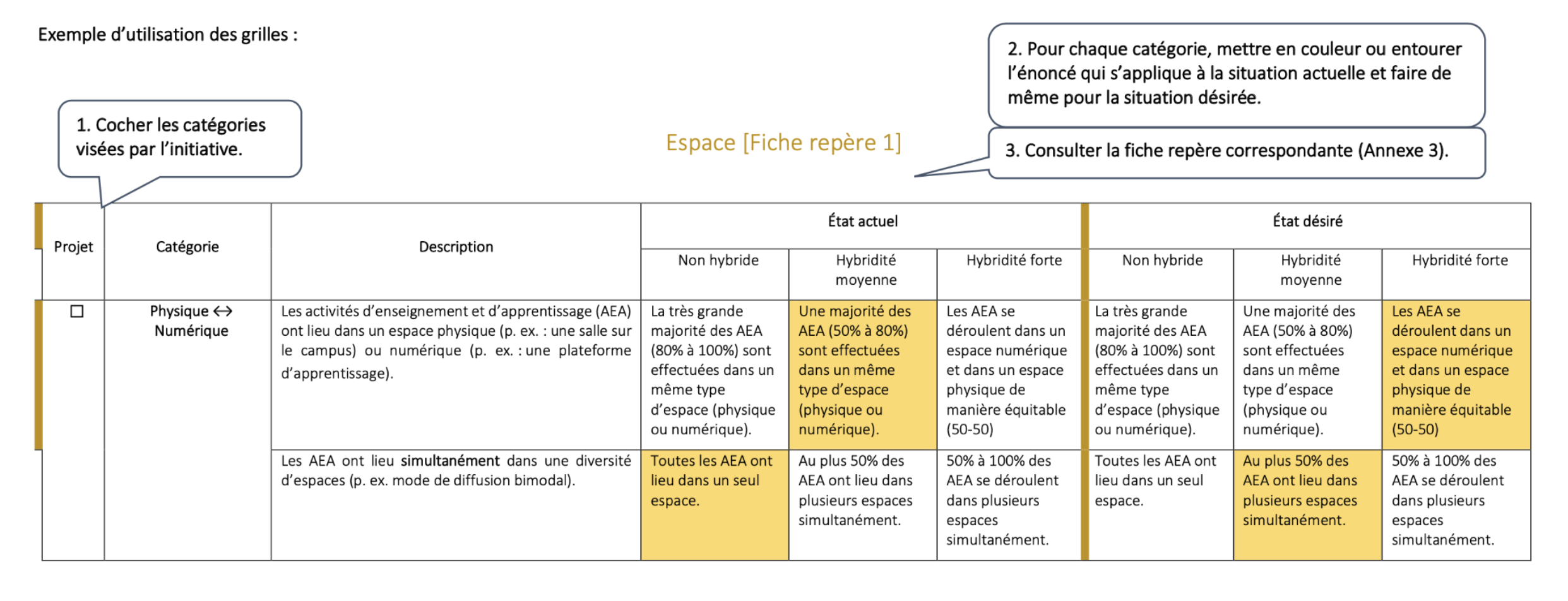
Using self-assessment grids to determine the current and desired situation:
Self-assessment grids provide the structure needed to systematically evaluate the level of hybridization. They define specific categories related to hybridization, such as the technological dimension, organizational maturity, administrative and pedagogical maturity, and many others. These grids guide the institution through a comparative analysis between the current situation and the desired one, laying the groundwork for the next steps in the hybridization process.
By approaching this step with rigor and active participation, higher education institutions can lay the groundwork for a successful educational transition toward hybridization, clearly identifying areas for development and aligning aspirations with institutional realities.
Step 2: Identifying a hybridization initiative
After completing a thorough self-assessment in the first step, the higher education institution moves into the second crucial phase of its journey toward hybridization: identifying a specific initiative. This step aims to connect the stakeholders involved and set direction based on the level of hybridization identified previously.
Highlighting the importance of choosing an initiative aligned with the identified level of hybridization:
Choosing the hybridization initiative is a strategic step. It needs to be guided by a thorough understanding of the institution’s current level of hybridization. This ensures the initiative is aligned with the organization’s capabilities, resources, and culture, avoiding a major gap between aspiration and reality.
Prioritizing projects based on the institution’s maturity and available resources:
The selection process isn’t just about choosing an initiative, but also about setting priorities. The institution’s maturity, the availability of human, financial, and technological resources, and alignment with leadership’s strategic vision are all criteria that guide how projects are prioritized. This ensures the chosen initiative is achievable and realistic within the institution’s specific context.
Identifying an initiative aligned with the identified level of hybridization:
A hybridization initiative can be considered based on various criteria, such as the type of target audience (for example, those trying to balance work/family/study), the field of study, the level of study (for example, undergraduate or graduate), or specific goals (for example, incorporating internships). This identification should be done collaboratively, involving the relevant stakeholders, to ensure the initiative matches the institution’s needs and realities.
By the end of this step, the institution will have clearly defined the hybridization initiative to pursue, guided by a thorough understanding of the current level of hybridization and of the options aligned with the institution’s strategic vision.
Step 3: Assessing the feasibility of the chosen initiative
After identifying a hybridization initiative, the institution enters a critical phase: assessing the feasibility of the chosen initiative. This step, essential to the project’s success, focuses on creating added value for the stakeholders involved, evaluating the hybridization categories affected, and ensuring the project’s economic viability and long-term sustainability.
Assessing feasibility based on the added value for the stakeholders involved:
The central goal of this step is to assess the added value the hybridization initiative brings to the stakeholders involved, particularly teachers, students, and administrative staff. It’s crucial to make sure the initiative concretely and meaningfully addresses an identified issue, thereby improving the educational experience. This could involve transforming a specific course, a teaching unit, or even an entire program.
Tools for assessing the hybridization categories affected:
Using specific tools is recommended to assess the hybridization categories affected by the initiative. These tools help pin down the specific dimensions of hybridization impacted by the project. For example, the analysis might focus on the technological dimension, organizational flexibility, or pedagogical aspects. This in-depth assessment helps determine the scope and potential impact of the initiative.
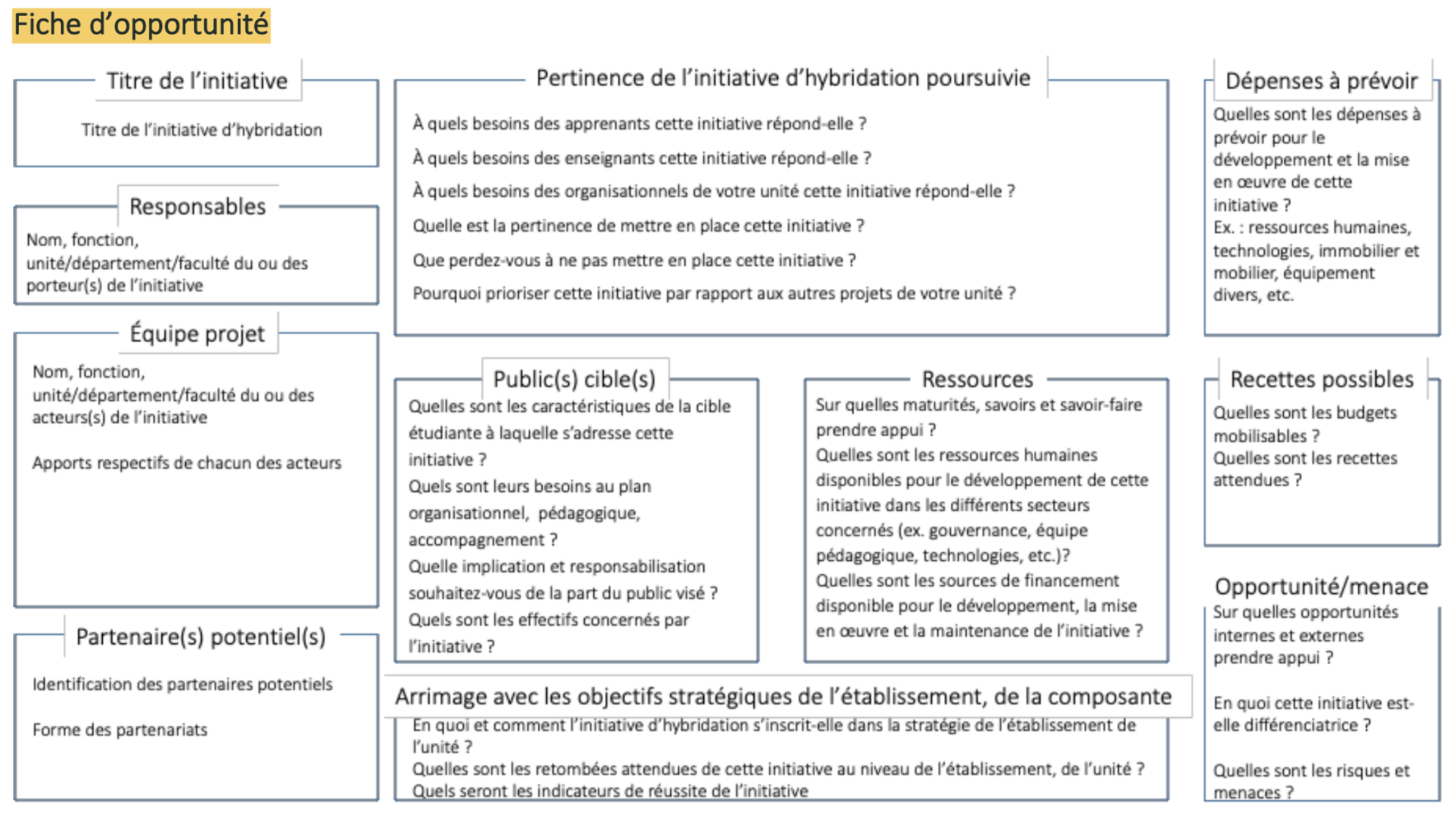
An opportunity sheet to ensure economic viability and long-term sustainability:
At the heart of this phase, the opportunity sheet acts as a structured guide for assessing the initiative’s economic viability and long-term sustainability. This sheet involves participation from all stakeholders, including learners, and uses targeted questions to clarify the nature of the project, its relevance to the target audience, the resources available, and its economic viability. The goal is to build a solid value proposition, aligned with learners’ needs and consistent with the institution’s overall strategy.
Turning threats into opportunities:
The final step of this assessment involves turning potential threats into opportunities. This may involve strategic partnerships with other institutions, identifying market niches, or innovating in how the institution addresses potential challenges. This proactive approach aims to ensure the long-term viability and success of the hybridization initiative.
By the end of this step, the institution will have a clear picture of the hybridization initiative’s feasibility, backed by rigorous assessment tools and a thorough understanding of the potential opportunities and challenges. This will lay the groundwork for successfully designing, developing, and implementing the initiative.
Step 4: Designing, implementing, and documenting the initiative
Design and implementation
Implementing hybridization initiatives is a crucial step that requires careful planning and strategic execution. This phase needs to account for several key elements to ensure the success and effectiveness of hybridization projects.
Planning and Organization:
Each initiative needs to be carefully planned, with clear timelines and defined goals. The roles and responsibilities of the various people involved (teachers, administrators, technicians, students) need to be clearly established.
Necessary Resources:
Ensure the availability of material, technological, and human resources. Plan training sessions or workshops for teachers and administrative staff to make adopting new technology and teaching methods easier.
Communication and Collaboration:
Maintain transparent, regular communication with all stakeholders. Encourage collaboration between different departments and units to share best practices and resources.
Technical and Pedagogical Support:
Set up technical support to quickly resolve technology-related issues. Provide pedagogical support to help design and implement hybrid learning activities.
Piloting and Gradual Evaluation:
Start with pilot projects to test and refine methods before rolling them out more broadly. Regularly evaluate progress and make adjustments as needed.
Documentation and Dissemination
Documenting processes and results is essential for tracking progress and recording challenges, solutions, and lessons learned. Regular evaluation and reporting help measure impact and keep stakeholders informed. Sharing knowledge through workshops, publications, or conferences is crucial for spreading lessons learned and best practices. Finally, continuous improvement is the driving force behind the ongoing evolution of hybridization practices, drawing on feedback and evaluations to innovate and adapt teaching methods.
Have a hybridization project?
If you’re planning to turn your teaching spaces into hybrid learning environments, the ideal solution is waiting for you at Kalyzée. Our groundbreaking HyFlex classrooms extend the reach of your training beyond traditional boundaries, offering an immersive, flexible experience for both on-site and remote learners.

With full end-to-end support, Kalyzée transforms your traditional training sessions into smooth hybrid experiences, equipped with automated, easy-to-integrate equipment.
Have a room renovation project? Kalyzée invites you to explore the audiovisual equipment selected by our experts to turn your in-person training into genuine hybrid environments. To learn more, visit our website.