Definition and features of augmented in-person learning
In the training field, a distinction needs to be drawn between traditional in-person learning and augmented in-person learning. Traditional in-person learning relies on the physical synchronization of the people involved: trainer and learners share the same space and time. This format encourages direct human interaction. That said, it has limits in terms of personalization and flexibility. Teaching tends to be linear, and adapting to learners’ individual needs can prove complicated.
Augmented in-person learning, meanwhile, strategically integrates digital technology. It’s not simply about adding tools — it’s a deep transformation of the learning environment. This approach keeps the benefits of face-to-face interaction while tapping into the potential of digital tools for a more dynamic, individualized experience. Tools such as real-time collaborative platforms, interactive quizzes, and digital simulations make it possible to personalize the learning path, encourage engagement, and make it easier to track information.
Unlike traditional in-person learning, augmented in-person learning allows for real-time adaptation. By collecting and analyzing interaction data, interactivity is strengthened, and learners become active participants in their own training.
It’s not simply about adding digital tools to a traditional classroom. It’s about rethinking the space and the interactions to create a richer, more interactive experience. This approach rests on several key principles:
Hybridizing formats: bringing together physical and digital spaces
Hybridization involves merging the benefits of face-to-face interaction (nonverbal communication, immediate responsiveness) with the flexibility and information richness offered by digital resources.
In practice, this takes the form of using real-time collaborative platforms during sessions — the ability to consult resources or take quizzes, while keeping the dynamic of group interaction that comes with being in person.
Example: During a marketing class, the trainer leads a group discussion on a case study. At the same time, learners use their computers to access real-time market data, letting them instantly enrich the discussion with up-to-date information.
Interactivity and engagement: cognitive and social stimulation
Using digital technology aims to boost learner involvement through interactive tools. These include instant polls, digital boards, or gamification software such as Cesim.
This approach encourages active participation and a personalized grasp of the teaching content, adapting the pace and format of learning to individual and group needs. The goal is to alternate the training’s key moments, with regular interaction both between individual learners and within the group, using digital technology.
Immersion and context: grounding knowledge in simulated environments
Using augmented reality (AR) and virtual reality (VR) makes it possible to create highly contextualized learning environments, where theoretical concepts are applied to simulated practical situations. In medicine, for example, VR can be used to simulate complex surgical procedures, while AR can overlay anatomical data onto real patients. This heightens emotional and cognitive engagement, improving retention and knowledge transfer.
Digital tools supporting augmented in-person learning
Implementing augmented in-person learning relies on the thoughtful use of a variety of digital tools. Here are a few examples:
Real-time collaboration platforms:
Tools such as Klaxoon, Beekast, and Wooclap make group interaction, brainstorming, and decision-making easier. These platforms offer features such as polls, quizzes, virtual whiteboards, and document sharing.
Augmented reality (AR) and virtual reality (VR):
These technologies make it possible to create immersive simulations and contextualized learning experiences. AR applications can overlay digital information onto the real environment, while VR immerses learners in virtual worlds.
Interactive whiteboards (IWBs):
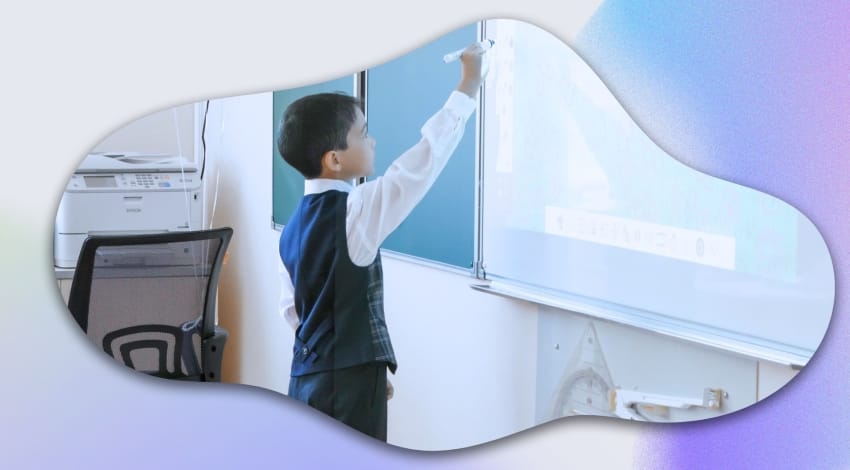
IWBs turn traditional boards into interactive touchscreens, letting trainers and learners annotate, draw, and work with digital content. We strongly recommend Newline interactive boards, running Android 13, for maximum flexibility.
Learning Management Systems (LMS):
LMS platforms such as Moodle or Canvas make it possible to centralize teaching resources, track learner progress, and facilitate communication.
From augmented in-person learning to augmented remote learning

What if we took augmented in-person learning even further? The idea is to open up our classrooms and make them accessible remotely. Picture this: classes are filmed and broadcast live. Remote participants take part as if they were there, with the same interactive tools as those in the room. It becomes a genuine hybrid experience, where in-person and remote blend together. Resources are shared more effectively, and you reach a wider audience.
Of course, this requires good equipment, a way to manage interactions, and adapting classes accordingly. And you shouldn’t forget the small things — informal chats, the morning coffee… At Kalyzée, we believe in this, and we’ve made it happen! In our ideal HyFlex classrooms, immersion and interaction are maximized. Digital technology blends in naturally, and the space adapts to needs. We create unique, personalized learning experiences, for education and training alike.
Want to learn more? Contact us!