Join us as we dive into an initiative shaping the future of education in French Amazonia. Inspired by the magazine “Au cœur du projet Connected French Guiana”, this article invites you to discover a remarkable human and technological journey.
“Connected French Guiana: Bridging the Gaps” isn’t just about building physical bridges in a territory where rivers are often the only way through — it’s about building digital links to provide access to education where traditional infrastructure reaches its limits.
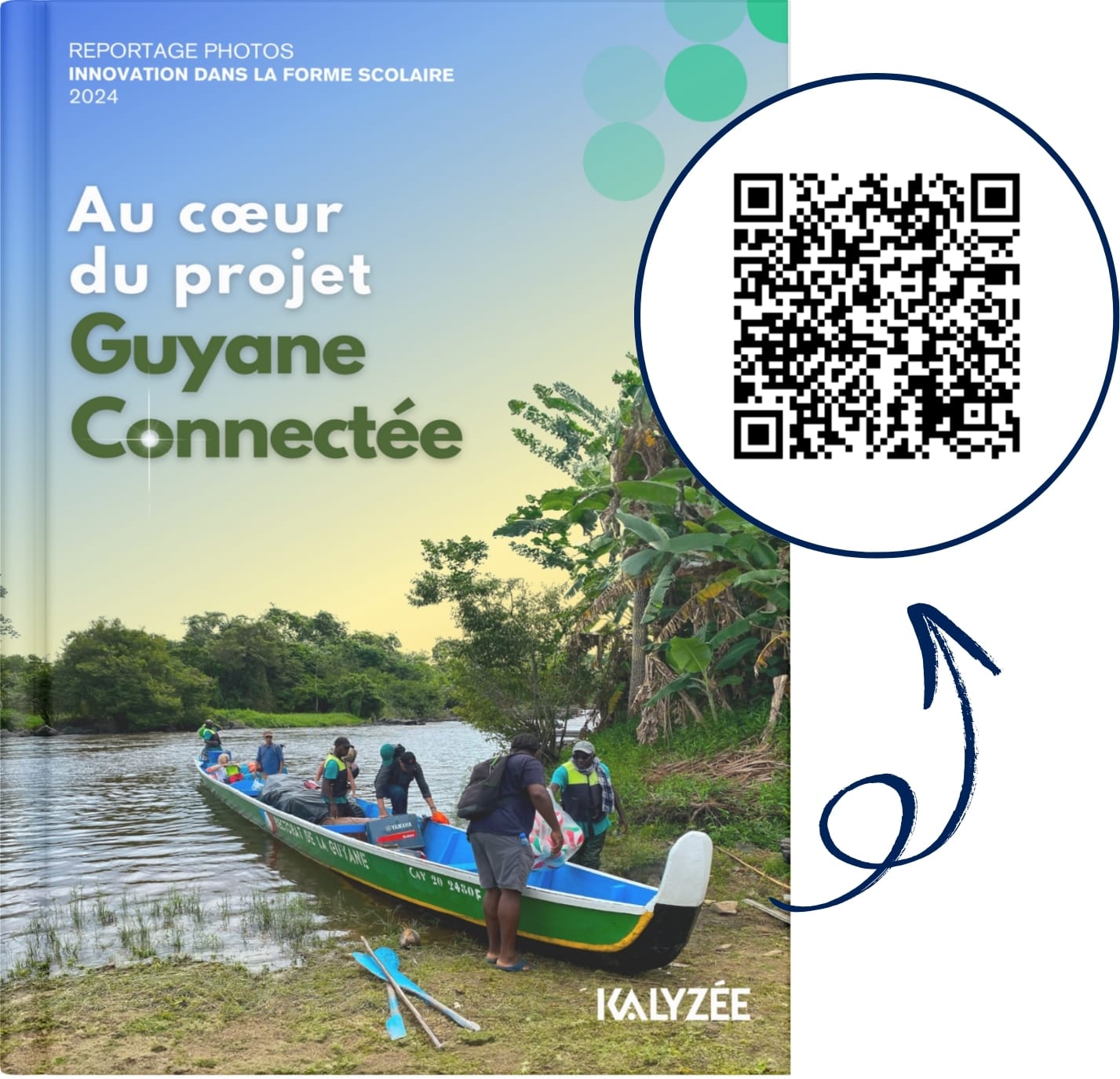
Let yourself be guided through this captivating journey, through a photo report from Maripasoula to the remote villages, by downloading the digital version of the magazine that inspired this article:
First, a bit of context
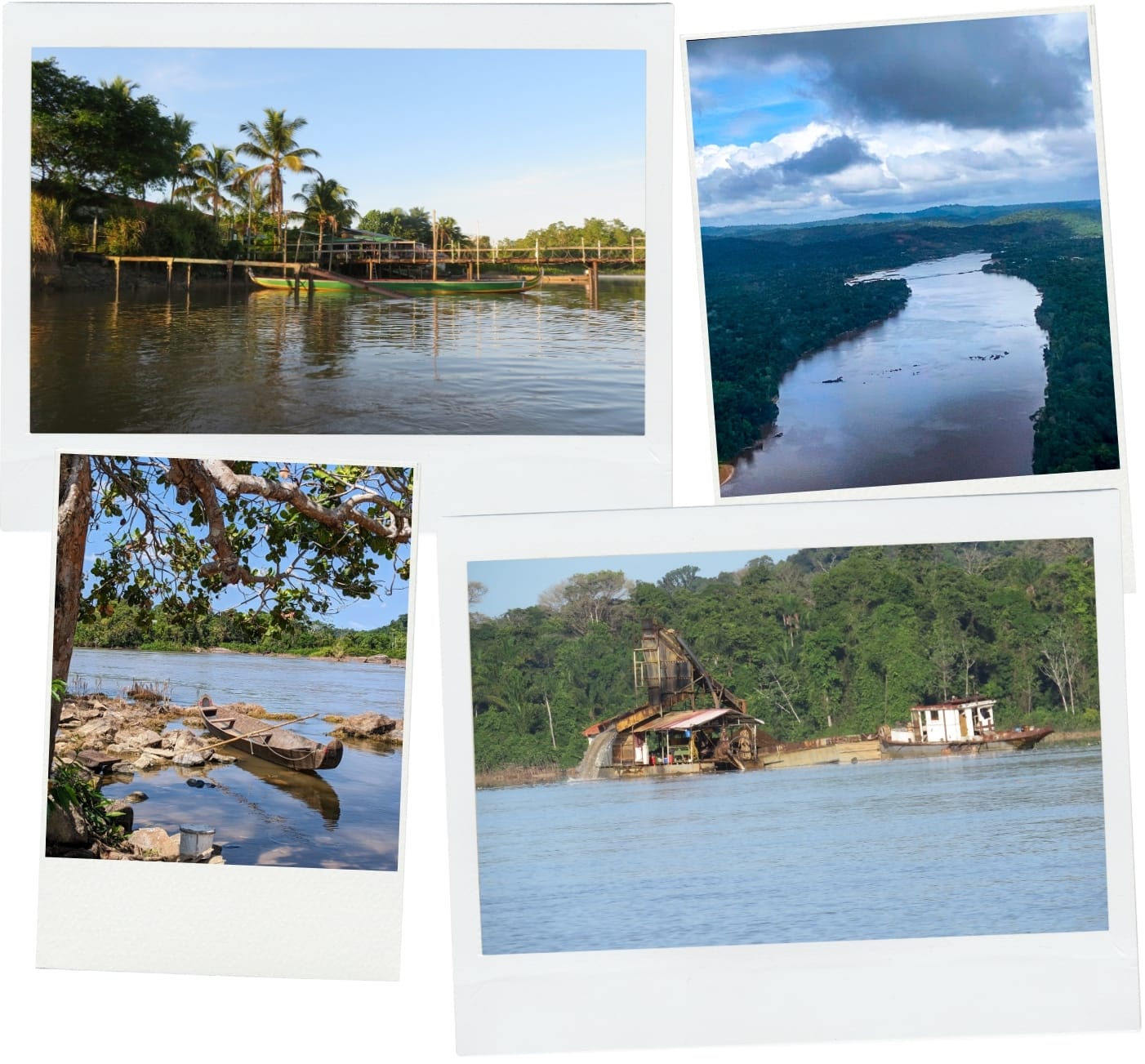
The Guianese Amazon is a vast, complex territory, where roads often give way to rivers as the only paths through. In this unique environment, Indigenous communities, such as the Amerindians and the Businenge, often live far from urban infrastructure. For young people, starting secondary school often means leaving home at age 11 to continue their schooling as boarders. This uprooting has major consequences: students falling behind, dropping out, and even a very high number of suicides.
Connecting isolated villages to secondary school
Facing the complex realities of the Guianese territory, the French Guiana regional education authority, under the leadership of its rector Philippe Dulbecco, committed to a deep transformation to guarantee access to education for everyone, including students from remote villages.
Now rector of the Académie de Grenoble, Philippe Dulbecco, then rector of French Guiana, was a key figure in launching and steering the Connected French Guiana: Bridging the Gaps project. His vision reflects a shared consensus in French Guiana: letting sixth- and seventh-grade students stay in their family and cultural environment for as long as possible before joining secondary school.
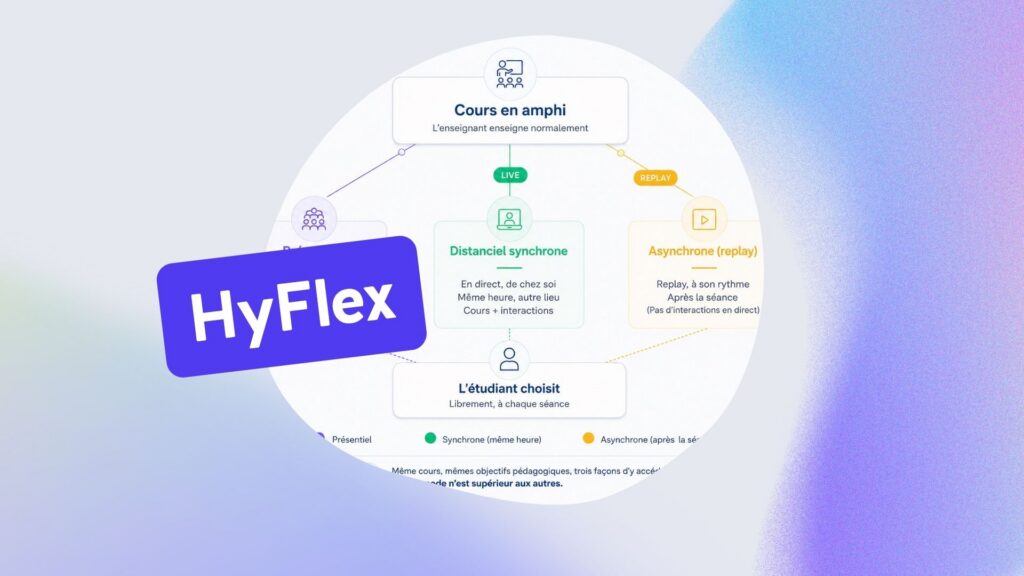
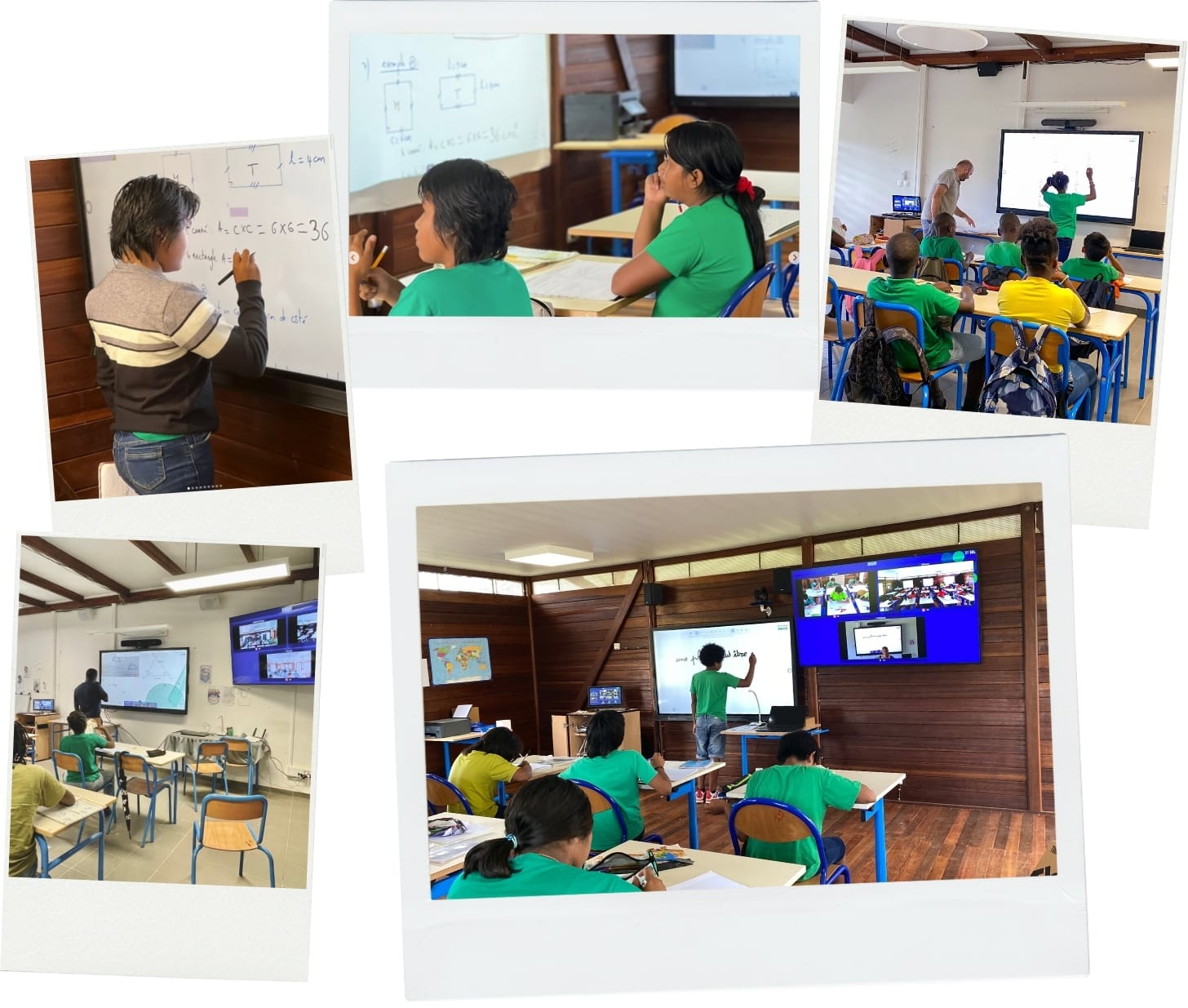
The ambition is clear: deploy innovative technological solutions to bring secondary school to the heart of isolated villages. Thanks to satellite infrastructure and the commitment of teaching and technical teams, connected classrooms have been set up in these remote villages. These rooms let students follow classes in real time, interacting with their teachers and classmates at the reference secondary school, as if they were there in person.
Pilot phase: Maripasoula and its 3 remote villages
The pilot phase of the Connected French Guiana: Bridging the Gaps project began in 2023 around Maripasoula, connecting Gran Man Difou secondary school to three neighboring villages: Kayodé, Taluen, and Antécume Pata. Over the past two years, this phase has made it possible to test the setup and prove both the feasibility and, above all, the effectiveness of hybrid teaching in the Amazon.
Partners of the Connected French Guiana, Bridging the Gaps project
The pilot phase required the involvement of numerous partners to overcome the complex challenges of the Guianese territory. Beyond the French Guiana regional education authority, which leads the project, the French Guiana Territorial Collectivity and local municipalities play a major role, particularly for logistics and funding. SPLANG handles the rollout of digital infrastructure in remote areas and ensures internet access, while MARLINK provides the satellite communication services essential for connectivity in these isolated areas where ground infrastructure is absent.

CNES, through its Espace pour la Guyane structural unit, was the operational lead for the project during its launch phase. EDF handles the electricity supply, essential for the connected classrooms to run. The Armed Forces and the RSMA (Adapted Military Service Regiment) provide essential logistical support for reaching isolated areas and training staff on equipment maintenance. Groupe SOS Jeunesse supports the young people, Kalyzée designed the ed-tech system and video conferencing setup, and AIS installs the equipment in the rooms. Finally, Aix-Marseille University and the University of French Guiana are involved in the teaching side, training teachers, and adapting practices for remote teaching. Native-language instructors, traveling teachers, and the Réseau Canopé rounded out this setup.
Solutions suited to a complex territory with little infrastructure
The challenges facing this territory are considerable: the low population density in areas where forest covers 90% of the land, geographic isolation that makes travel long and costly (by canoe, plane, or helicopter), and a lack of modern infrastructure.
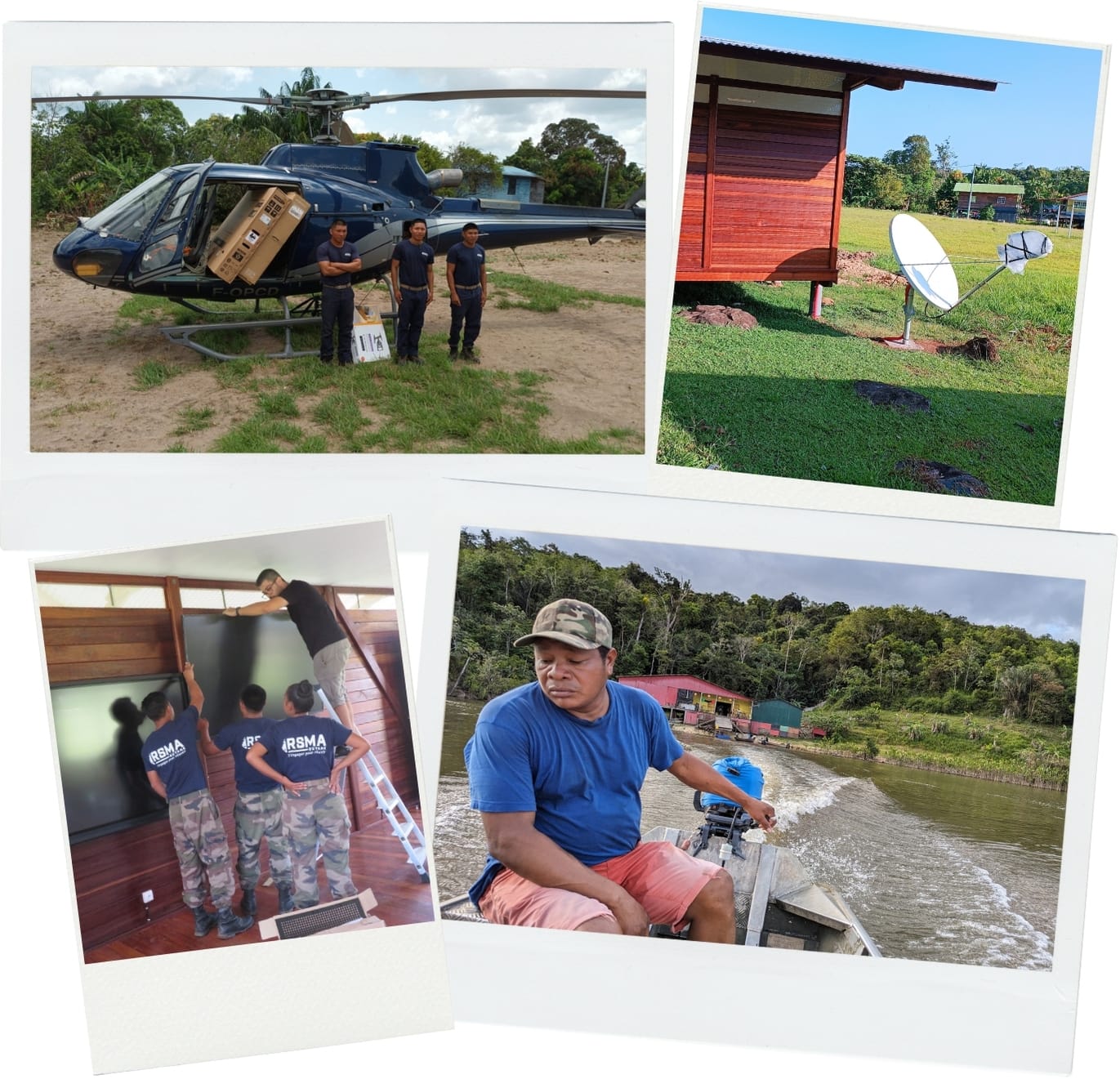
Access to drinking water, electricity, and a reliable communication network isn’t easy in these remote villages. Ensuring access to drinking water, electricity, and a reliable communication network is a daily challenge there. The Connected French Guiana: Bridging the Gaps project relies on solutions such as satellite dishes for the network, pumping stations for water, and solar panels for electricity — often the only alternatives where traditional infrastructure is absent. Navigating the Maroni River, the only access route, is also perilous and impassable depending on the season.
Outlook and rollout
Building on the success of this pilot phase, the Connected French Guiana: Bridging the Gaps project doesn’t stop there. It’s part of a longer-term vision, with a gradual five-year rollout. The goal is clear: progressively equip all remote villages in French Guiana to give every secondary-school-age student in the region access to school, even in the most isolated villages. The HyFlex classroom, designed by Kalyzée, has evolved considerably over the past two years, with the goal of offering a scalable concept to make it easier to expand the project on a large scale.
Connected French Guiana, Bridging the Gaps: an inspiration for the future
More than just a technology project, Connected French Guiana: Bridging the Gaps is a source of inspiration. It proves that it’s possible to overcome even the most extreme geographic constraints to guarantee a fundamental right: access to education. This model, born from the realities of the Guianese Amazon, opens up a new path that could well be adapted to other regions of the world facing similar challenges of isolation.
To learn more about this fascinating initiative, dive into the full magazine “Au cœur du projet Connected French Guiana”